

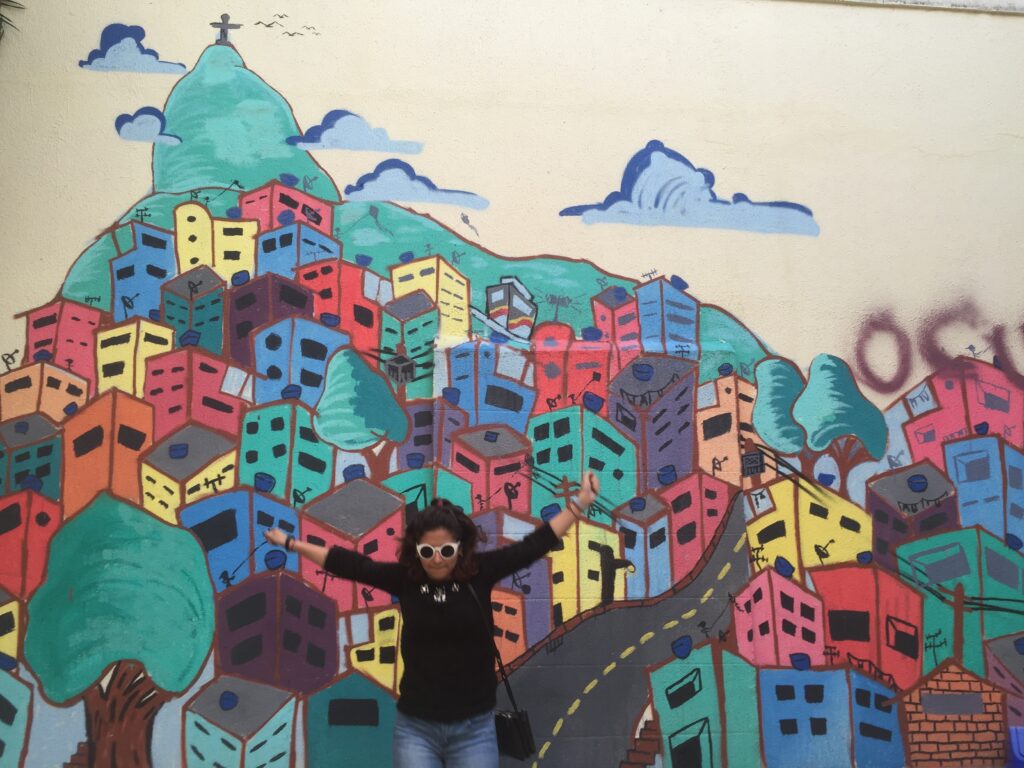
Photo Description: Art at the Institute of Social science and Politics (IESP) of the Federal University of Rio de Janeiro
The first thing that come in my mind after been in Rio is art. Art is everywhere in Rio from the first cab ride to tunnels, public spaces, parks, universities, highways, dilapidated houses, hospitals, and tourist places. Indeed art is in every nook and cranny of Rio from the favelas to the upper class neighborhoods, no one can escaped from it.
The art in Rio is not self gain or egocentric which is common to see in cities in the US in contrast, express social concern, political criticism or a economic statement. This method of expression has become an important way to educate and provide the youth with an alternative to decrease violence and crime and by bringing optimism and peace to the residents, children, and visitors.
“Street art here is no amateur work — it is bold, artistic, and expressive, and anything but graffiti.”-
Nellie Huang, Grad Adventures–
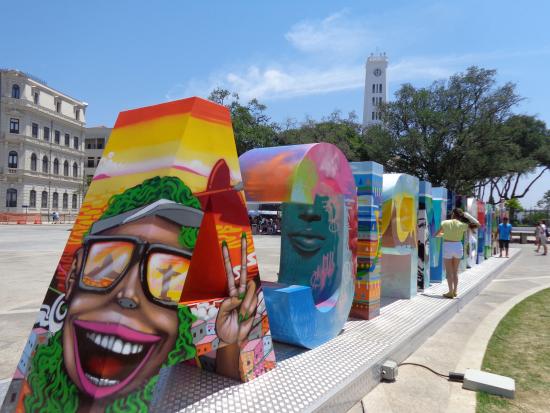
Photo Description: Letter sculpture for the Olympics in Praca Maua, Rio. (Photo by TripAdvisor)
“If we do not mobilize his death will be worthless.”-Mural in the Universidade do Brasil
In many cities, graffiti is considered vandalism and related to decay and outlawed in communities. Graffiti emergence in Brazil because of the movement of the hip hop culture in the mid 1980s, but not until 1990s is when graffiti started to get some sort of recognition. The 1990s raised to fame two of the most influential graffiti artists today the Os Gêmeos brothers who combined influences from hip hop and Brazilian folk culture in their street art. Finally in March 2009, Brazilian government passed legislation 706/07 which legalized street art.
The first humans embedded petroglyphs in cave walls. Graffiti is a genetic human nature.
In Brazil street art has taken different forms and shapes—from simple tags of identity, political context, to high end graffiti which everyone would appreciated. Certainly there is a sense of ownership to being able to put one’s tag in a wall.
There is two different type of tagging in Brazil, Grafite and Pichação. The later pichação is a distinctive, cryptic style, mainly on walls and vacant buildings. Artists often compete to tag in the most dangerous, illegal, and remote locations. The most famous pichação was made by Os Diferentes, who tagged the famously statue of Christ the Redeemer in 2010. Pichação has lost it initial role as an artsy way to promote political ideals, but still a social statement. It is a very easy way to promote opinions and a person just need spray paint. Also, Pichação became an inspiration to the influential Brazilian street artists Os Gêmeos and Nunca.
“I’ve always paid a great deal of attention to what happens on walls. When I was young, I often even copied graffiti.” –Picasso (Irvin)
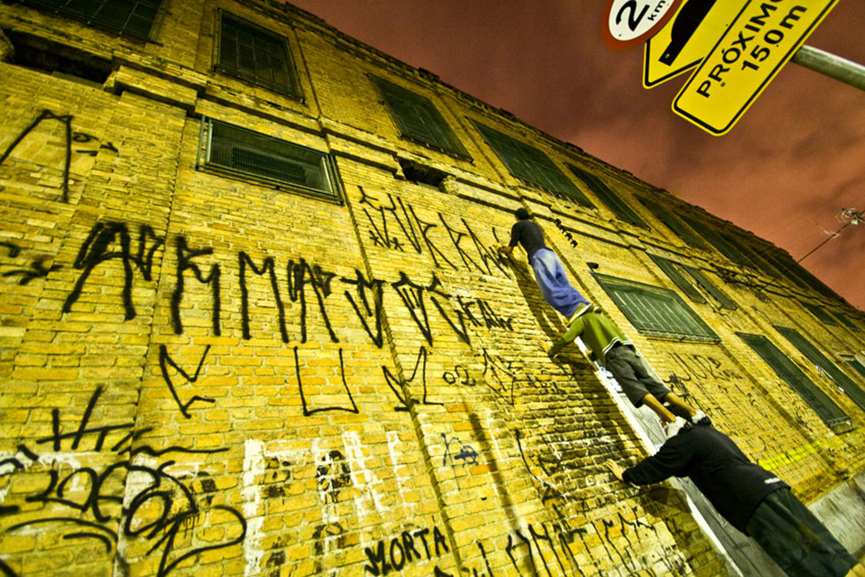
Photo Description: Pixação in the streets of Sao Paolo- Photo by Widewalls
ART IN THE FAVELAS
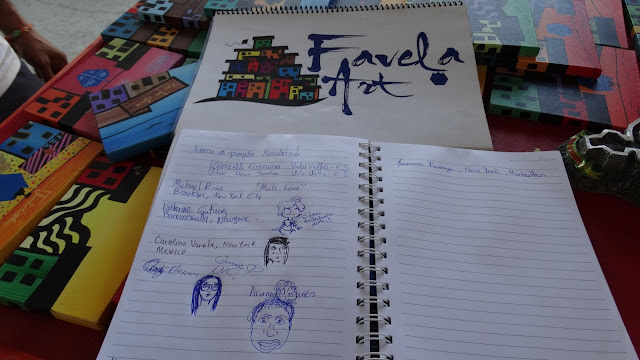
Art has also manifest as a sort of social change specially in the favelas. An example of it is Favela Art, a small booth outside Palmeira Station in the favela Complexo de Alemão.Favela Art away to promote the creativity of Complexo de Alemão. The project was
created by social entrepreneur Mariluce de Souza a resident of Complexo de Alemão. The booth sells “the art of the favelas” and raised funds to buy materials and continue its project to paint Complexo de Alemão with striking colors.
Also other organizations such as Institute Raizes em Movimiento or Haas&Hahn Favela Painting have also taken the lead on beautifying the favelas. The favelas has became a canvas telling an story and the art has become a vehicle for political expression and social change.
Photo Description: After purchased a paint one is able to sign a book which will be show to the kids that painted the canvases
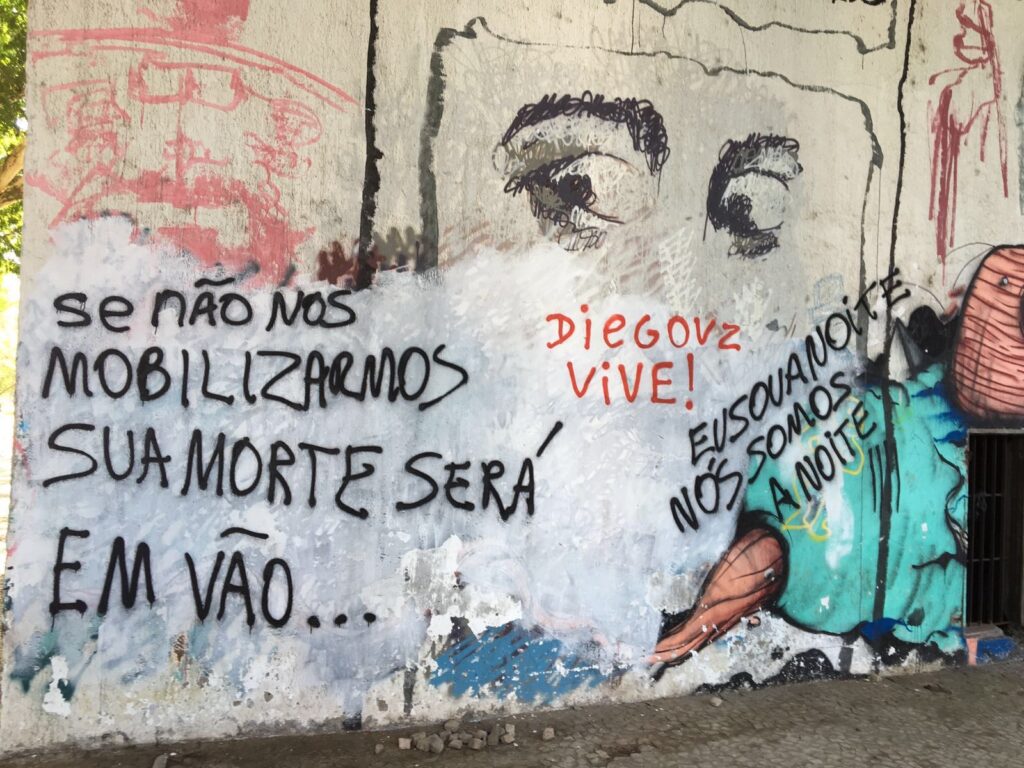
Photo Description: Institute Raizes Em Movimiento Headquarters in Complexo de Alemao
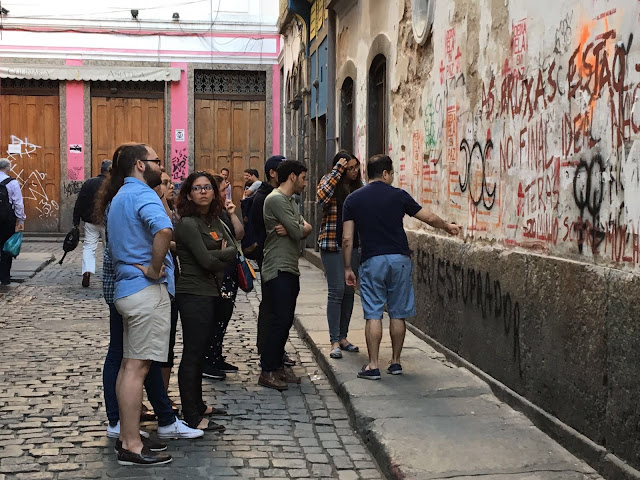
Photo Description: Dr. Vianna translating the art in the walls in the oldest neighborhood in Rio
Striking colors surround the marvelous city of Rio de Janeiro. The art is vivid because is like bandages applied to a hurt city trying to express itself with a can of paint and not triggering a gun. Art is power, but I will not excused artist who has manifested an abuse of it abolishing the idea of property by using buildings as tools of expression.
Street art in Brazil is a powerful tool to counteract the arbitrariness of power. The murals in Rio will never stop talking because the people in Rio are recording and documenting history in their walls, tunnels, public spaces, parks, universities, highways, dilapidated houses, hospitals, and tourist places.
For more Information:Haas&Hahn: How painting can transform communities | TED Talk /Haas & Hahn/ January 2014
Street Art in Rio: An Evolution of Urban Culture/Neillie Huang/ July 2014
The Work on the Street: Street Art and Visual Culture/Martin Irvine/ Georgetown Univesity/The Handbook of Visual Culture/ 1st ed
When Art Matters The Most: Brazil Graphiti Which Influenced The Nation and the World/Sanja Lazic/ July 2014
The Legalization Of Street Art In Rio de Janeiro, Brazil /Michelle Young/ Huffington Post / May 2012
Rio de Janeiro’s Christ the Redeemer statue marred with graffiti/Reuters/ NY Daily News / April 2010
Rio’s thriving art scene surrounds World Cup/Elaine Quijano/ CBS News / July 2014
Favela Painting/Haas & Hahn/ Website
Notes:“Favela” is a term used by non-residents. The favela dwellers call it “community”.
Portuguese:Complexo do Alemão – Favela Art – Mariluce Mariá – YouTube